Greek Letter Sigma SVG and STL: Integrating Typography into Digital Fabrication Workflows
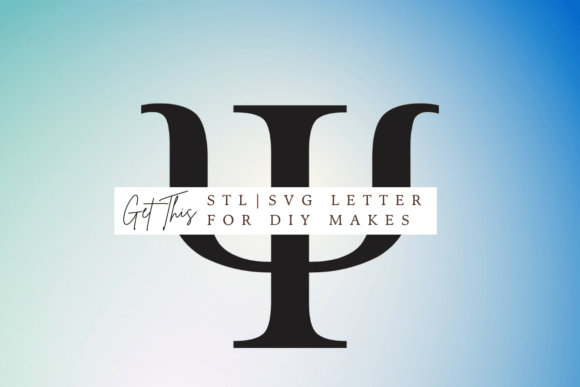
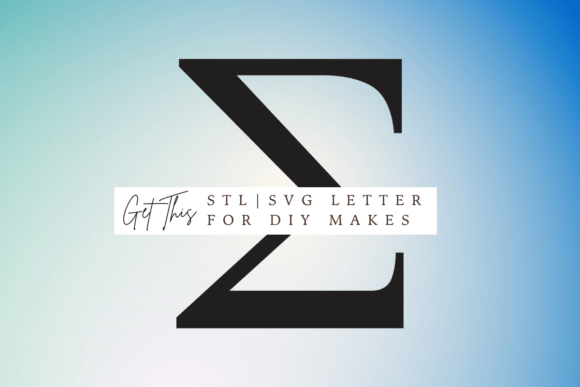
In the intersection of graphic design and digital manufacturing, typography often serves as the bridge between aesthetic concept and physical reality. The Greek Letter Sigma SVG and STL package represents more than just a character; it is a functional asset designed for makers who require precision across multiple fabrication methods. Utilizing the Playfair Display typeface, this digital download provides both vector and volumetric data, allowing creators to transition seamlessly from screen-based design to tangible output without losing typographic integrity. For professionals and hobbyists alike, understanding how to leverage these specific file formats is essential for maintaining quality control and workflow efficiency in projects ranging from signage to intricate jewelry.
Understanding the Dual-Format Asset
The inclusion of both SVG and STL formats addresses two distinct phases of the maker workflow. The SVG (Scalable Vector Graphics) file serves as the foundational 2D asset. It contains mathematical path data that ensures crisp edges at any scale, making it indispensable for laser cutting, vinyl plotting, and CNC routing. Because vectors are resolution-independent, the Sigma can be resized for a business card or a storefront sign without pixelation or loss of detail. This format interacts directly with software like Adobe Illustrator, Inkscape, Cricut Design Space, and LightBurn.
Conversely, the STL (Stereolithography) file introduces the Z-axis, transforming the letterform into a three-dimensional object. Pre-modeled at 5.5 inches tall by 5.5 inches wide by 1.5 inches thick, this mesh file eliminates the need for extrusion within CAD software. This is a significant time-saver for 3D printing workflows where font rendering can sometimes cause manifold errors or non-printable geometry. The pre-set thickness provides structural integrity for standalone displays while remaining lightweight enough for wall-mounted applications. Having both formats in a single library ensures visual consistency whether the final output is flat engraving or dimensional printing.
Pre-Production Planning and Software Compatibility
Successful integration of the Greek Letter Sigma SVG and STL begins before the machine is powered on. Preparation involves verifying software compatibility and establishing project parameters. For 2D applications, users should import the SVG into their vector editor of choice to check node count and path direction. While Playfair Display is an elegant serif font, high-contrast serifs can sometimes present challenges during laser cutting if the material is too brittle or the kerf is too wide. Adjusting stroke width or adding a slight offset path in the planning phase prevents breakage in materials like acrylic or thin wood.
For 3D printing, the STL file should be imported into slicer software such as Cura, PrusaSlicer, or Bambu Studio to evaluate orientation. Although the model is provided at a specific size, scaling may be necessary. When resizing, maintain uniform scaling to preserve the aspect ratio of the serif details. Users must also consider layer height and infill density during this stage. A 1.5-inch thickness allows for substantial internal structure, but for decorative items like cake toppers, reducing infill to 10-15% with a gyroid pattern can save material and print time without sacrificing external quality. This planning step transforms a generic digital file into a project-specific component optimized for the intended manufacturing method.
Execution Across Fabrication Methods
The versatility of this asset lies in its adaptability to various production environments. Each fabrication method requires specific adjustments to maximize the potential of the Playfair Display letterform.
Laser Cutting and Engraving
When using the SVG for laser work, the distinction between cutting and engraving lines is critical. The elegant thins and thicks of the Playfair Display font create natural depth when engraved. For wood engraving, test runs on scrap material help determine the optimal speed and power settings to achieve contrast without burning the delicate serifs. If cutting the letter out entirely, consider using tabs or a mask to keep the inner counters (the enclosed spaces in the letter) aligned until the final pass is complete. This prevents the center of the Sigma from falling out prematurely and ruining the cut.
3D Printing and Post-Processing
The STL file’s 1.5-inch depth offers excellent bed adhesion when printed flat, but printing vertically can showcase the face of the letter more prominently. If printing vertically, use supports specifically tuned for serif overhangs to prevent drooping. After printing, the layered nature of FDM printing may obscure the smooth curves of the typeface. Sanding with progressive grits (starting at 220 and moving to 600+) or applying a filler primer restores the smooth finish expected of professional typography. For resin printers, the high resolution captures the sharp transitions of the serifs natively, requiring less post-processing but careful attention to support placement to avoid scarring the visible face.
CNC Machining and Vinyl Application
For CNC routers, the SVG acts as the toolpath generator. Selecting the appropriate bit size is vital; a V-bit can replicate the variable stroke width of the Playfair Display font better than a flat end mill. Depth passes should be calculated to ensure the serifs remain connected to the main body of the letter. In vinyl cutting workflows, the SVG’s clean paths allow for precise weeding. However, because serifs have fine points, using transfer tape with medium-to-high tack ensures these delicate elements transfer to the substrate without stretching or tearing.
Practical Applications and Project Integration
The Greek Letter Sigma SVG and STL fits into diverse creative and commercial workflows. Understanding these use cases helps makers justify the acquisition and plan future product lines.
- Personalized Signage: The classic authority of Playfair Display makes this Sigma ideal for academic awards, fraternity/sorority decor, or mathematics-themed office signage. The 3D version adds a premium tactile element that flat prints cannot achieve.
- Cake Toppers and Event Crafts: Scaled down, the SVG works beautifully for acetate or wood cake toppers. The serif style conveys elegance suitable for weddings and anniversaries, distinguishing the craft from standard sans-serif options.
- Jewelry and Keychains: The STL can be scaled significantly for pendants or charms. When reducing size, verify that the thinnest parts of the serfs remain printable or castable. Metal clay artists can also use the STL to create molds for silver or bronze casting.
- Wall Art and Mixed Media: Combine the 3D printed Sigma with painted backgrounds or framed shadow boxes. The physical depth creates real shadows that change throughout the day, adding dynamic visual interest to static wall art.
Quality Control and Long-Term Asset Management
Integrating digital assets into a repeatable workflow requires organization and quality assurance. Since this is an instant download with no physical item shipped, the responsibility for file management rests entirely on the user. Create a dedicated folder structure for typography assets, separating SVGs from STLs to prevent version confusion. Naming conventions should include the font name, character, and dimensions (e.g., Playfair_Sigma_Upper_5.5in.stl) to facilitate quick retrieval during active projects.
Quality control extends to the output itself. Maintain a log of successful settings for different materials when using this specific letterform. The complex geometry of serifs means that settings working for a block letter may fail here. Documenting laser power, print orientation, and feed rates builds a personal knowledge base that reduces trial-and-error in future productions. Furthermore, always verify licensing terms for commercial use versus personal use before selling finished goods. Understanding the legal scope of the digital download protects small business owners and entrepreneurs from intellectual property issues.
Ultimately, the Greek Letter Sigma SVG and STL is a tool for execution. It removes the technical barrier of modeling complex typography from scratch, allowing makers to focus on material selection, finishing techniques, and creative application. By treating this digital download as a integrated component of a broader fabrication process rather than a standalone novelty, creators can produce professional-grade results that honor the elegance of the Playfair Display typeface while leveraging modern manufacturing technology.